

What are the installation requirements for the support structure of aluminium column formwork?
Nov 05, 2025
Leave a message
As a leading supplier of Aluminium Column Formwork, I understand the significance of proper installation requirements for the support structure. In this blog post, I will delve into the key aspects that need to be considered when installing the support structure for aluminium column formwork.
Site Preparation
Before the installation of the support structure, thorough site preparation is essential. The ground where the formwork will be installed must be level and stable. Any unevenness or soft spots in the ground can lead to instability in the formwork during the concrete pouring process. A simple way to ensure the ground is level is by using a spirit level or a laser level. If the ground is not level, appropriate measures such as filling or compacting should be taken to achieve a level surface.
Moreover, the site should be free from any debris, obstacles, or potential hazards. This includes removing any rocks, branches, or loose soil that could interfere with the installation or operation of the formwork. A clean and clear site will not only facilitate the installation process but also enhance the safety of the workers.
Foundation Requirements
The foundation of the support structure plays a crucial role in providing stability. For aluminium column formwork, a solid foundation can be achieved in several ways. One common method is to use concrete footings. These footings should be designed to support the weight of the formwork, the concrete, and any additional loads during the construction process.
The size and depth of the concrete footings depend on various factors, such as the height and weight of the column, the soil conditions, and the local building codes. In general, the footings should be at least as wide as the base of the support structure and extend deep enough into the ground to prevent settlement.
Another option is to use adjustable steel bases. These bases can be adjusted to level the support structure on uneven ground. They are also easy to install and can be reused for multiple projects. When using adjustable steel bases, it is important to ensure that they are properly tightened and secured to prevent any movement.
Support Structure Assembly
The support structure for aluminium column formwork typically consists of vertical posts, horizontal beams, and diagonal braces. These components need to be assembled correctly to ensure the stability and integrity of the formwork.
When assembling the vertical posts, they should be plumb and aligned properly. This can be checked using a plumb bob or a laser level. The posts should be firmly anchored to the foundation to prevent any lateral movement.
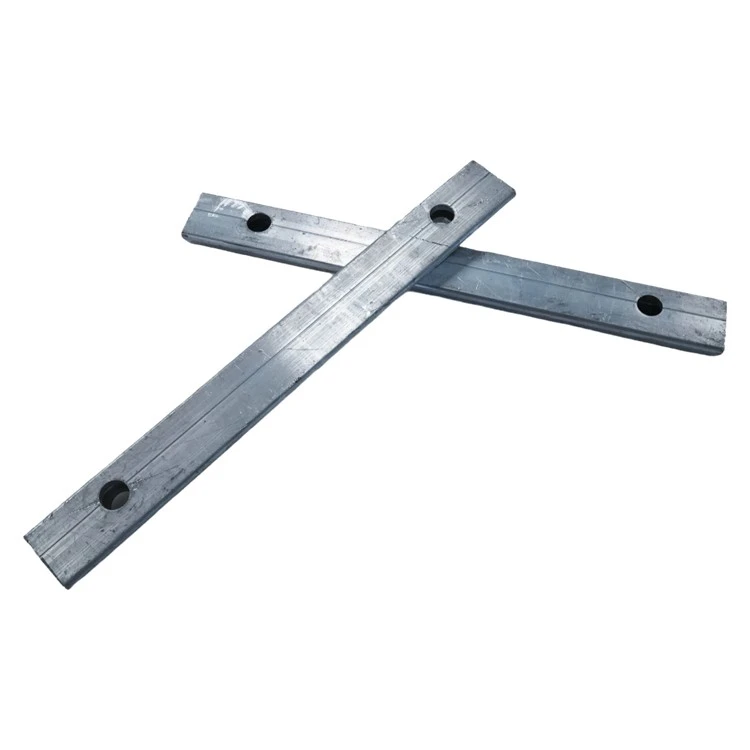
The horizontal beams should be securely attached to the vertical posts. They provide additional support and help distribute the load evenly across the formwork. The connections between the beams and the posts should be strong and reliable. For this purpose, we recommend using high - quality Aluminum Formwork Support Connection Strips. These strips are designed to provide a secure and stable connection between the components of the support structure.
Diagonal braces are used to strengthen the support structure and prevent it from buckling or collapsing. They should be installed at appropriate angles and securely fastened to the vertical posts and horizontal beams. The number and placement of the diagonal braces depend on the height and size of the column formwork.
Alignment and Leveling
Proper alignment and leveling of the support structure are critical for the quality of the concrete columns. The formwork should be aligned precisely to ensure that the columns are straight and plumb. Any misalignment can result in columns that are out of shape or have uneven dimensions.
To achieve accurate alignment, a string line or a laser alignment system can be used. These tools help in setting the correct position of the formwork and ensuring that it is parallel and perpendicular to the reference points.
Leveling is equally important. The top of the formwork should be level to ensure that the concrete surface is flat. A spirit level or a laser level can be used to check the levelness of the formwork. If the formwork is not level, adjustments can be made by adjusting the height of the support structure components.
Connection and Fixing
All the connections in the support structure should be properly tightened and fixed. Loose connections can lead to instability and movement of the formwork during the concrete pouring process. This can result in cracks, uneven surfaces, or even collapse of the formwork.
We use high - strength bolts, nuts, and washers to connect the components of the support structure. These fasteners should be tightened to the recommended torque values. Regular inspections should be carried out to ensure that the connections remain tight throughout the construction process.
In addition to mechanical connections, some formwork systems may also use clamps or clips for fixing. These should be properly installed and checked for security.
Load - Bearing Capacity
The support structure must be designed to withstand the loads imposed on it during the construction process. The loads include the weight of the formwork itself, the weight of the concrete, the weight of the workers and equipment, and any additional loads such as wind or vibration.
When selecting the components of the support structure, it is important to consider their load - bearing capacity. Our Form Aluminium Formwork and Type C Alu Formwork are designed to have high load - bearing capacities, ensuring the safety and stability of the formwork system.

Engineers should calculate the loads accurately and select the appropriate size and type of support structure components. This calculation should also take into account the safety factors to ensure that the support structure can handle unexpected loads.
Safety Measures
Safety is of utmost importance during the installation of the support structure for aluminium column formwork. Workers should be provided with appropriate personal protective equipment (PPE), such as hard hats, safety glasses, and safety shoes.
The work area should be clearly marked and barricaded to prevent unauthorized access. Warning signs should be posted to indicate potential hazards.
Before starting the installation, a safety briefing should be conducted for all the workers involved. They should be trained on the proper use of tools and equipment, as well as the correct installation procedures.
Regular safety inspections should be carried out during the installation process. Any safety hazards should be identified and addressed immediately.
Quality Control
Quality control is an ongoing process during the installation of the support structure. Inspections should be carried out at various stages of the installation to ensure that the work meets the required standards.
Before the concrete is poured, a final inspection should be conducted to check the alignment, leveling, and stability of the formwork. Any defects or issues should be corrected before proceeding with the concrete pouring.
After the concrete has set, the formwork can be removed. At this stage, the quality of the concrete columns should be checked. Any surface defects or dimensional inaccuracies should be noted and rectified if necessary.
Conclusion
In conclusion, the installation requirements for the support structure of aluminium column formwork are complex and require careful planning and execution. From site preparation to quality control, every step plays a crucial role in ensuring the safety, stability, and quality of the formwork system.
As a reliable supplier of Aluminium Column Formwork, we are committed to providing high - quality products and professional technical support. Our products, such as Aluminum Formwork Support Connection Strips, Form Aluminium Formwork, and Type C Alu Formwork, are designed to meet the highest standards of quality and performance.
If you are interested in our products or have any questions about the installation requirements of aluminium column formwork, please feel free to contact us for procurement and further discussion. We look forward to working with you on your next project.
References
- Building Construction Handbook, various editions
- Standards and Guidelines for Formwork in Construction, industry - specific publications
- Engineering Design Principles for Structural Support Systems, academic and professional resources